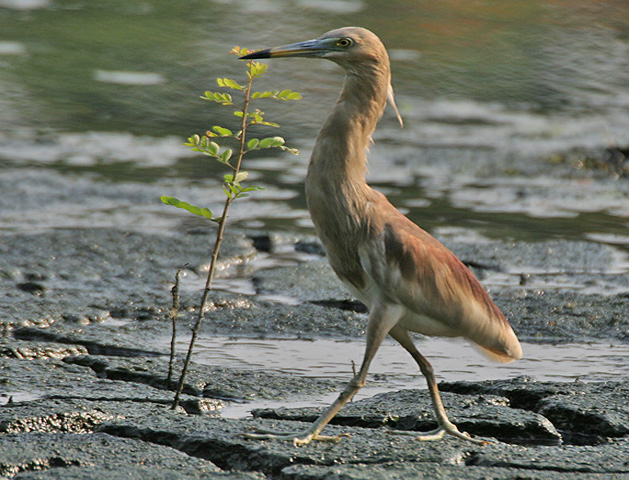

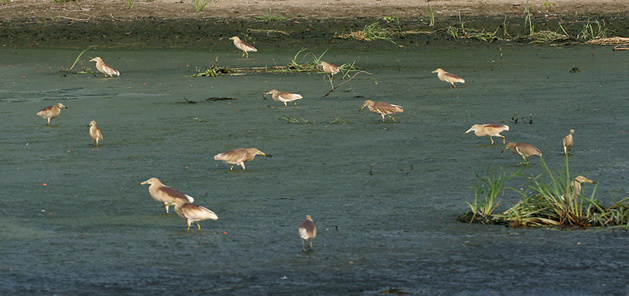
Indian Pond Heron
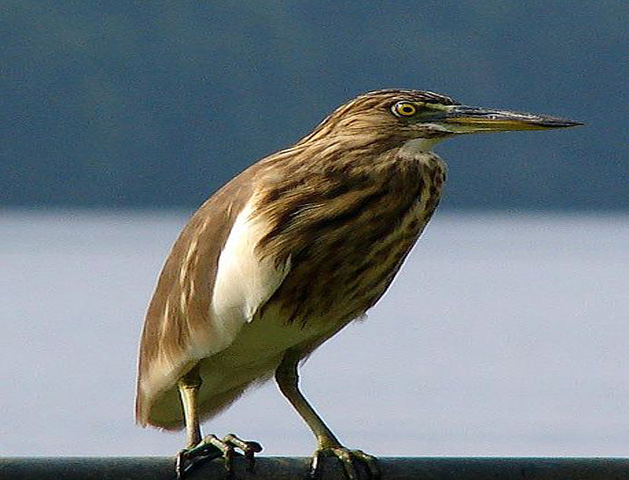
In non-breeding plumage
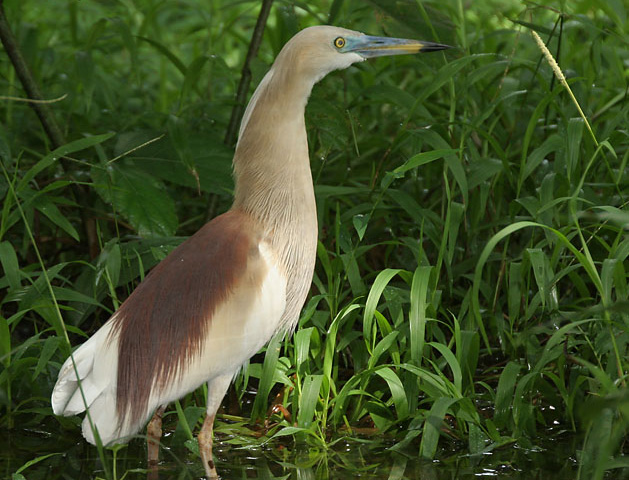
Breeding plumage
Conservation status : Least Concern (IUCN 3.1)
Scientific classification
Kingdom: Animalia
Phylum: Chordata
Class: Aves
Order: Ciconiiformes
Family: Ardeidae
Genus: Ardeola
Species: A. grayii
Binomial name
Ardeola grayii
(Sykes, 1832)
Synonyms
Ardeola leucoptera
The Indian Pond Heron (Ardeola grayii) is a small heron. It is of Old World origins, breeding in southern Iran and east to India, Burma and Sri Lanka.
Contents
- 1 Description
- 2 Ecology
- 3 References
- 4 =Gallery
Description
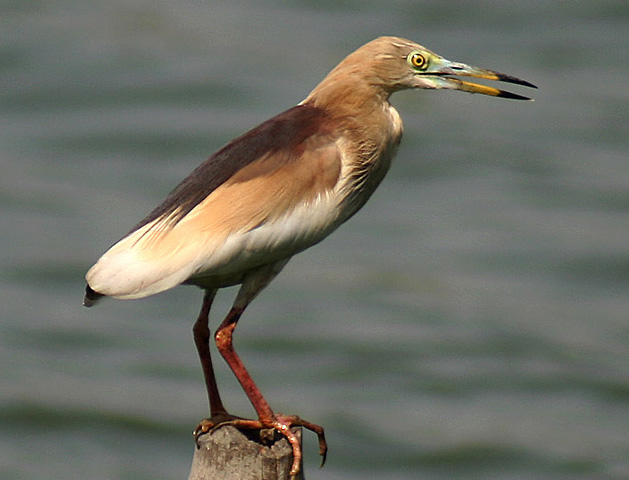
In Breeding plumage with red legs in Kolkata, West Bengal, India.
They appear stocky with a short neck, short thick bill and buff-brown back. In summer, adults have long neck feathers. Its appearance is transformed from their dull colours when they take to flight, when the white of the wings makes them very prominent. It is very similar to the Squacco Heron, Ardeola ralloides, but is darker-backed. To the east of its range, it is replaced by the Chinese Pond Heron, Ardeola bacchus.
During the breeding season, there are records of individuals with red legs. The numbers do not suggest that this is a normal change for adults during the breeding season and some have suggested the possibility of it being genetic variants.[2][3][4][5]
Erythristic plumage has been noted.[6] The race phillipsi has been suggested for the populations found in the Maldives, however this is not always recognized.[7]
They are very silent but may give a harsh croak when flushed or near their nests.[7]
This bird was first described by Colonel W. H. Sykes in 1832 and given its scientific name in honour of John Edward Gray.
Ecology
The Indian Pond Heron’s feeding habitat is marshy wetlands. They usually feed at the edge of ponds but make extensive use of floating vegetation such as Water hyacinth to access deeper water. They may also on occasion swim on water or fish from air
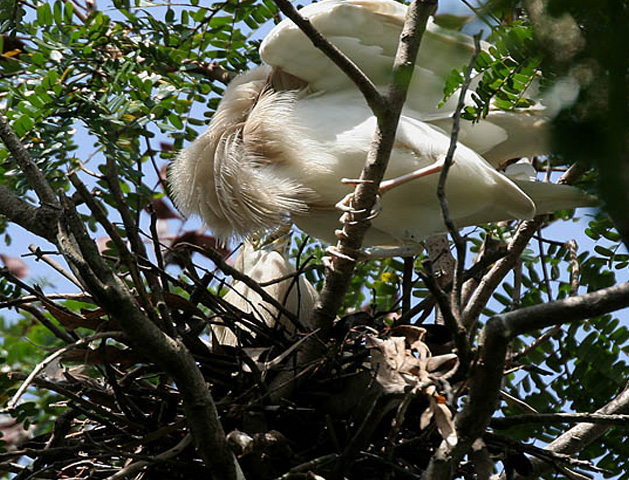
Pair at Nest in Kolkata, West Bengal, India.
They nest in small colonies, often with other wading birds, usually on platforms of sticks in trees or shrubs. 3-5 eggs are laid.[11] These herons feed on insects (including dragonflies[12]), fish (Barilius noted as important in a study in Chandigarh) and amphibians.[13]
Nocturnal movements of Pond Herons have been noted along the coast near Chennai.[14]
They are very common in India, and they can be approached very close before they are flushed. They may also forage at garbage heaps.
They have few predators and injured birds may be taken by birds of prey.[15]
An arbovirus “Balagodu”, trematodes and several other parasites have been isolated from the species.[16][17][18][19][20] Antibodies to Japanese Encephalitis/West Nile Virus has been detected in Pond Herons and Cattle Egrets from southern India.[21] Heavy metal pollution appears to be indicated particularly in the tail feathers.[22]
Karyology studies indicate that Pond Herons have 68 chromosomes